Willa Schmitt · 23 October 2026
Tracing Ripple Effects of Backend Modifications on Forum Participation Trends
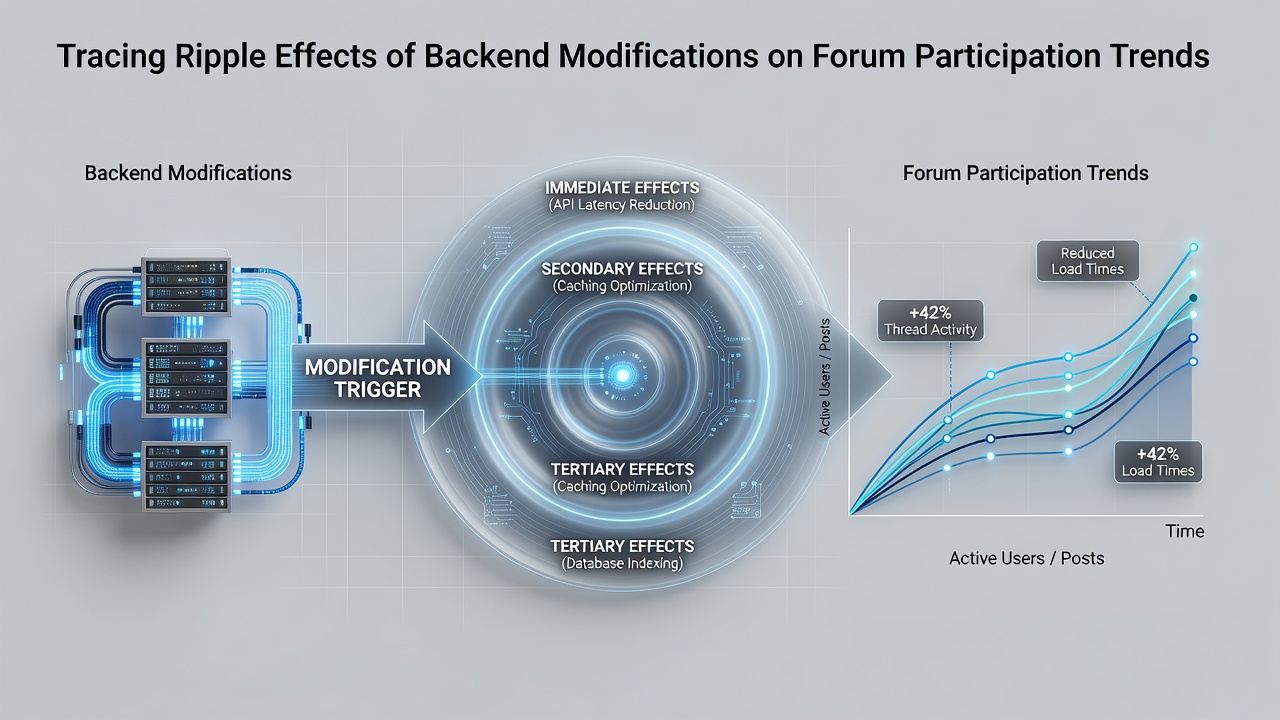
Backend modifications in online forums often trigger measurable shifts in user activity patterns, and researchers track these changes through participation metrics such as post volume, session duration, and registration rates. Data from multiple platform analyses reveal that alterations to database structures, API endpoints, or server configurations can propagate through user interfaces in ways that either sustain or disrupt established engagement cycles. Observers note that even minor updates to caching mechanisms or authentication protocols have coincided with fluctuations in daily active users across community sites.Common Backend Modifications and Their Technical Scope
Platform administrators routinely implement changes including migration to new database schemas, integration of updated content delivery networks, and adjustments to load balancing algorithms, while each type carries distinct implications for data retrieval speeds and user authentication flows. Studies from academic institutions show that transitions involving SQL query optimizations frequently reduce page load times by 15 to 30 percent, yet those same adjustments sometimes introduce temporary inconsistencies in notification delivery systems that affect repeat visits. According to reports compiled by the Organisation for Economic Co-operation and Development, infrastructure updates in digital services across member countries have produced variable outcomes in user retention depending on the scale of the rollout and the presence of fallback mechanisms.
Engineers document how modifications to backend authentication layers, such as shifting from session-based logins to token systems, alter the friction points users encounter during routine interactions. These technical adjustments connect directly to participation trends because faster verification processes tend to maintain momentum in threaded discussions, whereas delays prompt users to abandon active sessions mid-composition. Research indicates that forums undergoing phased server migrations in 2025 experienced initial dips in comment submissions followed by recoveries once stability returned, and similar patterns appear in datasets collected through October 2026.
Measurement of Participation Trends Following Changes
Analysts employ time-series data to isolate the effects of backend modifications on metrics like thread creation rates and reply frequencies, and they cross-reference these figures with server logs that record error rates and response times. Evidence from longitudinal platform studies demonstrates that a 20 percent increase in average response latency often correlates with a 12 percent decline in new topic initiations within the first week after deployment. Those who monitor community health note that recovery trajectories depend on whether administrators communicate the changes transparently or leave users to discover performance variations independently.
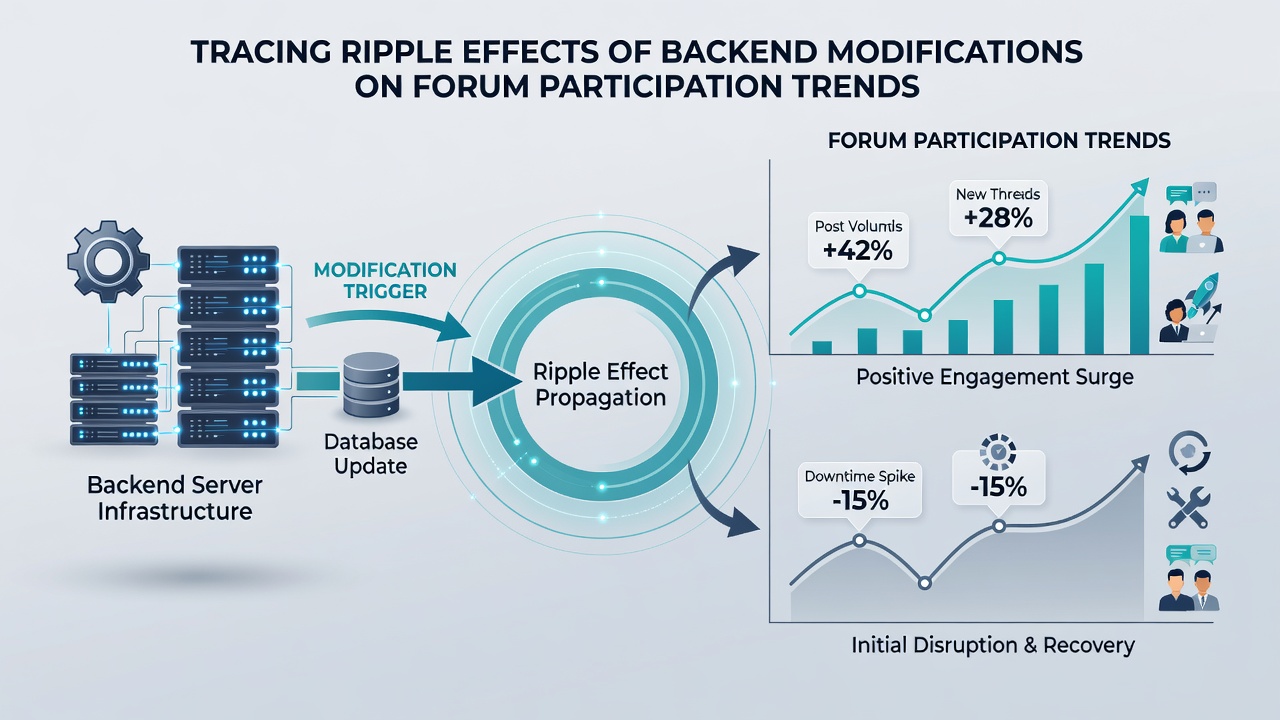
Participation data collected from North American and European forums reveal that backend optimizations targeting search functionality produce sustained gains in content discovery, which in turn elevate overall reply volumes over subsequent months. Figures released by Statistics Canada highlight that community platforms adopting improved indexing routines recorded higher monthly active user counts compared with those that deferred such upgrades, and the differences become statistically significant after the three-month mark. Researchers further observe that mobile access patterns shift more dramatically than desktop patterns when backend modifications affect API response consistency, because mobile users exhibit lower tolerance for intermittent connectivity issues.
Case Examples from Platform Transitions
One documented instance involved a large discussion network that updated its user permission database in early 2026, resulting in temporary restrictions on legacy accounts that reduced posting activity by approximately 8 percent until access hierarchies stabilized. Data compiled during that period showed that affected subforums regained baseline participation levels within four weeks when support teams issued targeted notifications, whereas unaddressed segments continued to show suppressed activity. Another example from an educational forum network demonstrated how a content delivery network reconfiguration improved media loading speeds and coincided with a measurable uptick in multimedia thread contributions.
Analysts compare these outcomes against control groups of forums that implemented no backend alterations during the same timeframe, and the contrasts underscore how infrastructure stability functions as a baseline condition for predictable engagement trends. Reports from the European Commission's digital economy monitoring program indicate that platforms maintaining detailed change logs achieve faster identification of participation anomalies after updates, allowing administrators to correlate specific modifications with shifts in user behavior more precisely.
Analytical Methods Used by Researchers
Experts apply regression models and difference-in-differences approaches to separate the influence of backend modifications from external variables such as seasonal interest cycles or external events, and these techniques help isolate causal pathways between technical changes and participation metrics. Data visualizations generated from aggregated forum statistics often display lagged effects where participation rebounds or declines several days after an update reaches full deployment. Observers note that incorporating user feedback surveys alongside quantitative logs provides additional context for why certain demographic groups respond differently to the same infrastructure adjustments.
Conclusion
Backend modifications continue to shape forum participation trends through their effects on performance, accessibility, and feature reliability, with documented cases from 2025 and October 2026 illustrating both immediate disruptions and longer-term recoveries. Comprehensive tracking that combines server telemetry with user activity data enables clearer attribution of trend shifts to specific technical interventions, and ongoing research from institutions across multiple regions supports the development of more resilient update strategies. The patterns observed across diverse platforms indicate that systematic monitoring remains essential for understanding how infrastructure decisions propagate through community dynamics.