Bianca Schmitt · 9 October 2026
Decoding User Behavior Patterns in Response to Infrastructure Changes in Online Communities
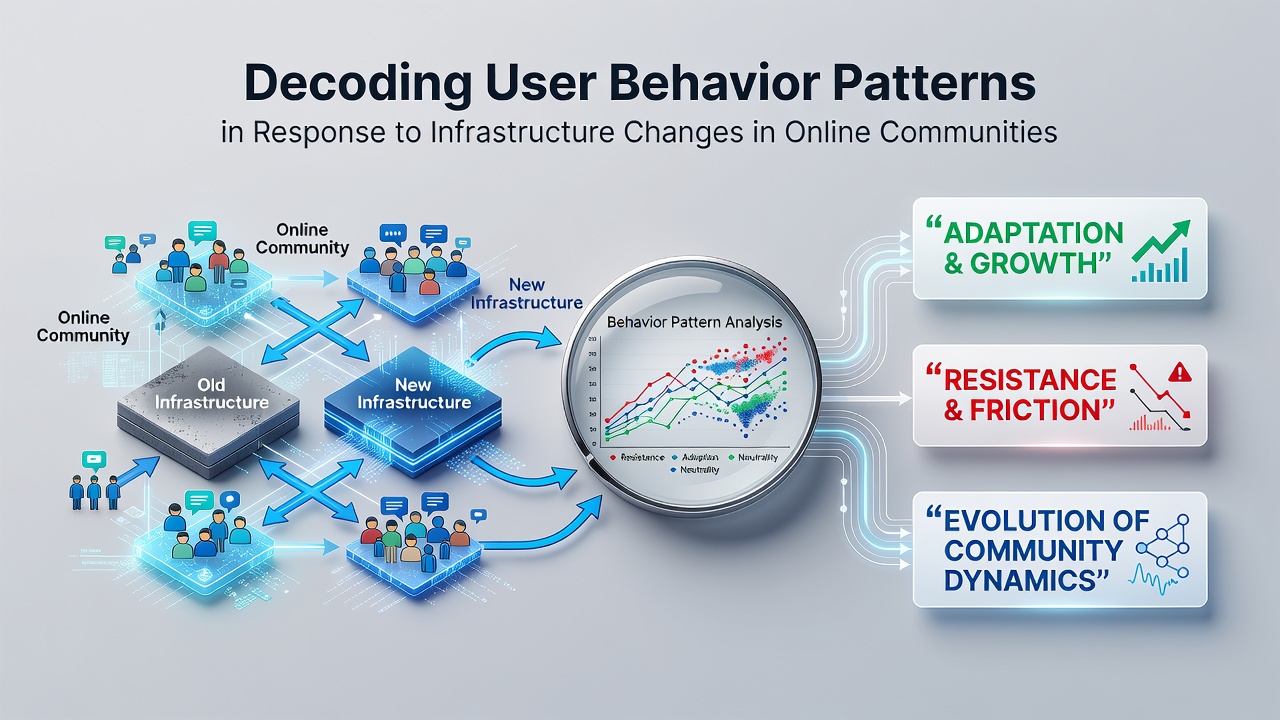
Online communities experience infrastructure changes through server migrations, interface redesigns, moderation policy shifts, and backend algorithm adjustments that alter how users interact with platforms. Researchers track these shifts by examining metrics such as login frequency, post volume, comment threads, and migration to alternative sites, which reveal consistent patterns across forums, social networks, and collaborative spaces.
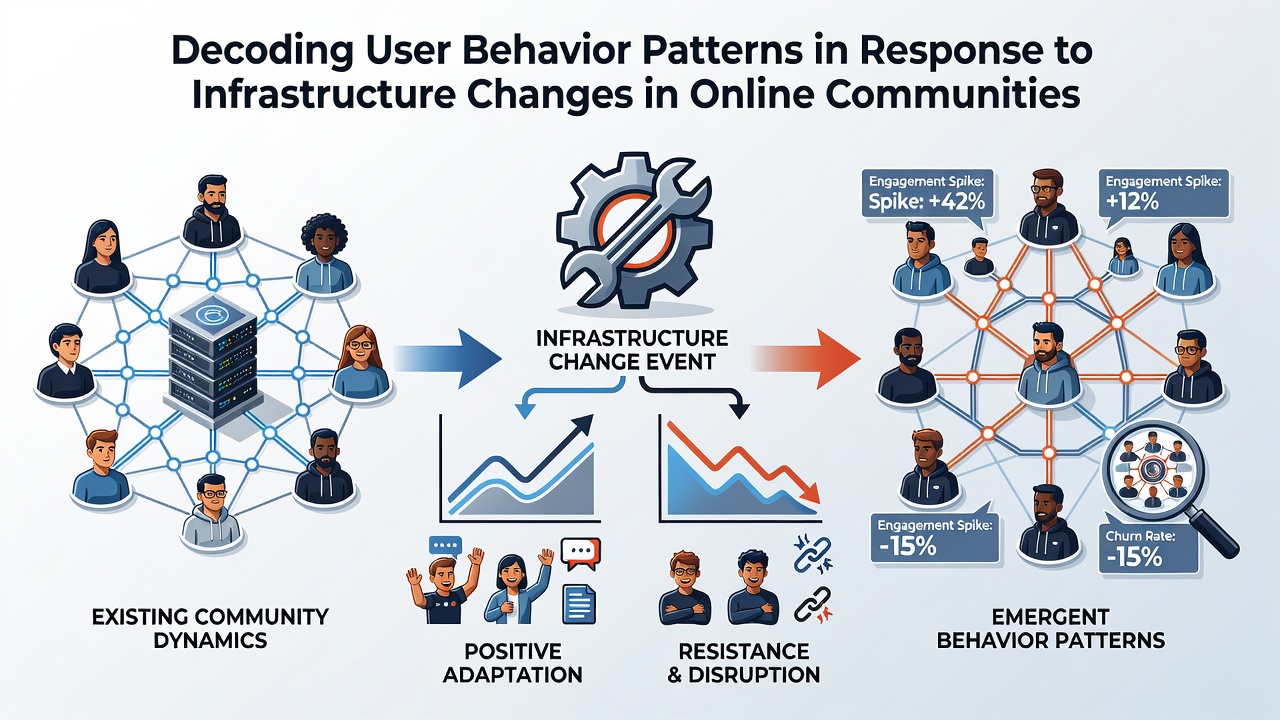
Data from multiple platforms indicates that users often reduce activity immediately following major updates while they assess new features and navigation structures. Studies compiled by the Pew Research Center show participation dips ranging from 15 to 30 percent in the first two weeks after significant changes, after which activity rebounds at varying rates depending on community size and the nature of the modification.
Short-Term Response Mechanisms
Users respond to infrastructure alterations through several observable behaviors that researchers categorize as resistance, experimentation, and temporary withdrawal. Resistance appears when members post complaints in dedicated threads or create polls requesting reversions to previous settings, whereas experimentation involves testing new tools such as updated search functions or notification preferences. Temporary withdrawal occurs as individuals reduce posting while they monitor how others adapt, creating a measurable lag in content generation that lasts until core group members reestablish norms.
Platform logs from large discussion boards demonstrate that peak complaint volume occurs within 48 hours of an update rollout, after which thread activity transitions toward troubleshooting and feature requests. Observers note that smaller communities with fewer than 5,000 active members exhibit faster stabilization, often within five days, because direct moderation responses can address concerns before they spread.
Long-Term Adaptation and Retention Data
Longer-term tracking reveals that infrastructure changes influence retention through both positive and neutral outcomes once users integrate new systems. Figures from October 2026 platform reports indicate that communities implementing gradual rollout schedules retained 82 percent of pre-change user bases six months later, whereas abrupt full launches correlated with 12 percent higher attrition rates. Retention improves further when administrators provide documented migration guides and maintain parallel legacy interfaces during transition periods.
Researchers examining Stack Exchange network data found that users who engaged with tutorial content within the first week after changes showed 40 percent higher continued participation compared with those who did not. Similar patterns appear in Discord server statistics where voice channel modifications prompted members to form alternative servers only when communication about the rationale remained limited.
Analytical Approaches Used by Researchers
Analysts decode behavior patterns through a combination of quantitative telemetry and qualitative content review. Telemetry captures clickstream data, session duration, and feature adoption rates, while content review examines sentiment in public posts and private feedback channels. Machine learning models applied to these datasets identify clusters of users who migrate together, remain inactive, or increase engagement after initial hesitation.
Academic teams at institutions including the University of Toronto have published methods that correlate infrastructure event timestamps with behavioral shifts across thousands of user accounts. These models highlight that geographic location influences adaptation speed, with users in regions served by improved data centers showing quicker return to baseline activity levels than those experiencing temporary latency increases.
Case Examples from Established Platforms
One documented instance involves a major wiki platform that updated its editing interface in early 2025, prompting an initial surge in help-desk tickets followed by a redistribution of editing contributions toward users comfortable with the new toolbar layout. Another case from a European health discussion network showed that privacy policy infrastructure updates led members to increase use of anonymous posting options by 25 percent, according to internal logs shared with regulatory reviewers.
Additional evidence emerges from gaming communities where server architecture upgrades produced measurable changes in group formation, with players consolidating into fewer but larger guilds once latency issues resolved. These shifts occurred alongside stable total user counts, indicating reorganization rather than outright departure.
Conclusion
Patterns in user response to infrastructure changes follow predictable sequences of assessment, adjustment, and stabilization that platform operators can measure through established telemetry and content analysis techniques. Continued collection of cross-platform data supports refined prediction models that help administrators anticipate retention impacts and time communication strategies effectively.